- Nouveau
- Disponible
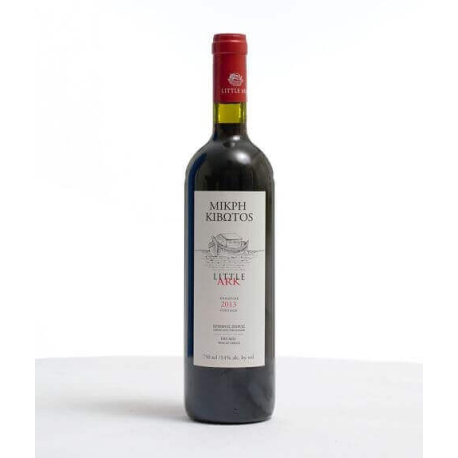

Are you looking for a beautiful Greek red wine that expresses all the power and finesse of indigenous Hellenic grape varieties? The Little Ark (Μικρή Κιβωτός) cuvée from Lantides Estate combines the vibrancy of Xinomavro and the roundness of Agiorgitiko , both from the mountainous terroirs of the Peloponnese and Macedonia. This wine, with its Mediterranean soul, has spent a year in new oak barrels .
 Température de service
A servir entre 15 et 18°
Température de service
A servir entre 15 et 18°
 Accords mets et vins
Poissons grillés & en sauce
Accords mets et vins
Poissons grillés & en sauce

Satisfait ou remboursé

Paiement sécurisé

dès 100 € d'achat
Fiche technique
| Cepage | Albarino |
| Cepage | Antao Vaz |
| Type | Rosé |
En savoir plus
The Lantides Estate , also known as Ktima Lantides , is located in the Nemea region, in the heart of the Peloponnese, about thirty kilometers southwest of Corinth. Founded in 1993 by oenologist Panikos Lantides , the estate has remained family-owned and independent.
Panikos Lantides was born in Morphou, Cyprus. In 1970, he left his island to study oenology in Montpellier , then viticulture in Bordeaux . He began his career in Greece as head winemaker in several major wineries, notably in Nemea, Attica and Mantinia.
But very quickly, he wanted to make wine according to his convictions. He started with a small plot in Attica, before returning to Nemea , drawn by the climate and soils. He thus founded Lantides Estate in 1993. The first vine he planted was Chardonnay – a surprising but important choice for export. The following year, he added Agiorgitiko , which quickly became the estate's signature red wine. Other grape varieties followed, always with a clear objective: to showcase the potential of Greek wines with rigor and precision .
Today, the estate has nearly 70 hectares of its own vineyards , and 20 hectares in collaboration with local growers.
The estate is located in Xerokampos , in the municipality of Nemea , in the northeastern Peloponnese , about 35 km southwest of Corinth . The red grape vines are planted on the Asprokampos hills , between 600 and 650 meters above sea level , in a secluded and naturally ventilated area. This altitude provides freshness, essential for preserving acidity and tension in the red wines. The white grapes are planted slightly lower down, in the Skotini Valley , at 550 meters above sea level , in the neighboring Argolis region , known for its well-drained soils and more temperate climate.
The overall climate is Mediterranean with continental influences : plenty of sunshine, cool nights, and constant winds. The soils are primarily clay-limestone , with some sandier areas. This complex terroir allows for the production of fresh, balanced, and well-defined wines , both red and white.
The vines are cultivated at altitudes between 550 and 650 meters , on hillsides exposed to wind and significant temperature variations. This natural freshness allows for the production of wines that are ripe, structured, and balanced. The estate focuses on local grape varieties such as Agiorgitiko , Xinomavro , and Moschofilero , but also works with international varieties like Chardonnay , Cabernet Sauvignon , and Merlot , always in harmony with the terroir.
The estate produces approximately 200,000 bottles per year . Approximately 50% of the production is exported, mainly to the United States, Canada, the United Kingdom, Belgium, Germany, Switzerland and Austria .
The vines are cultivated using sustainable farming practices . The harvest is done by hand , with rigorous sorting in the vineyard. Each grape variety is vinified separately, under conditions adapted to its specific profile. Reds such as Agiorgitiko , Xinomavro , and Cabernet Sauvignon are often aged in oak barrels to refine their structure. Whites— Chardonnay , Moschofilero , Asyrtiko , and Malagouzia —are crafted to preserve aromatic purity and freshness. The style is clear: precise, straightforward, and balanced wines that respect the fruit and the terroir, without excessive oak influence.
The Peloponnese is a mountainous peninsula located in the far south of mainland Greece. It boasts more than 50 peaks exceeding 1,000 meters , interspersed with fertile valleys, plateaus, hills, and coastal plains. This rugged topography creates a multitude of microclimates , highly favorable to viticulture.
Les zones viticoles les plus réputées, comme Nemea ou Mantinia, se situent en altitude, ce qui permet une bonne fraîcheur nocturne, essentielle pour la préservation de l’acidité et l’équilibre des vins. La proximité de la mer Égée ou du golfe de Corinthe apporte quant à elle des influences maritimes, qui limitent les excès de chaleur en été.
L’IGP Péloponnèse (ΠΓΕ Πελοπόννησος) quant à elle est l’une des indications les plus étendues et variées de Grèce. Créée en 1989, elle couvre toute la région du Péloponnèse, au sud de la Grèce continentale. Cette appellation regroupe sept unités régionales :
C’est dans cette zone que l’on retrouve certains des cépages les plus emblématiques du pays, comme l’Agiorgitiko, le Moschofilero, ou encore le Roditis. Contrairement aux AOP, cette IGP permet plus de souplesse dans les assemblages et les pratiques. Elle est donc le terrain idéal pour les producteurs qui souhaitent innover.
L’IGP Péloponnèse autorise une grande variété de styles : vins blancs, rouges et rosés, allant du sec au doux, avec également des vins légèrement effervescents. La région se distingue par l’utilisation majoritaire de cépages autochtones, qui représentent environ 90 % de l’encépagement. Parmi eux : Agiorgitiko, Mavrodaphni, Moschofilero, Roditis, Assyrtiko, Kydonitsa, entre autres.
Les rouges sont vinifiés selon la méthode traditionnelle, avec fermentation à température contrôlée (max 20°C), pour préserver le fruit. Les blancs, eux, sont souvent travaillés avec des techniques modernes, donnant des vins vifs, floraux, fruités, adaptés à une consommation jeune mais aussi capables de vieillir.
L’IGP autorise également l’usage raisonné de cépages internationaux (Chardonnay, Syrah, Merlot, Cabernet Sauvignon...), souvent en assemblage, permettant aux producteurs de créer des cuvées originales, tout en gardant une signature locale forte.
This wine is rooted in two exceptional Greek terroirs. The first is located on the eastern slope of Mount Asprokampos in Nemea , at an altitude of 650 meters , where the vines benefit from perfectly drained clay-limestone soil . The second vineyard is situated on the Amyndeon plateau in the north of the country, in the Florina region, perched at 550 meters , bringing freshness and tension to the wine. It's a bold blend, but one that pays off in the bottle; your palate will agree.
Are you looking for a beautiful Greek red wine that expresses all the power and finesse of indigenous Hellenic grape varieties? The Little Ark (Μικρή Κιβωτός) cuvée from Lantides Estate combines the vibrancy of Xinomavro and the roundness of Agiorgitiko , both from the mountainous terroirs of the Peloponnese and Macedonia. This wine, with its Mediterranean soul, has spent a year in new oak barrels .